Evaluating the Beehive Outline Icon for Your Design Projects
When selecting visual assets for a digital or print project, the decision often extends beyond simple aesthetics. It involves a practical evaluation of format compatibility, scalability, and how well a specific style aligns with your project's goals. The Beehive Outline Icon represents a specific category of design resources, and understanding its characteristics can help you determine if it's the right tool for the job.
Understanding the Core Asset: The Beehive Outline Icon
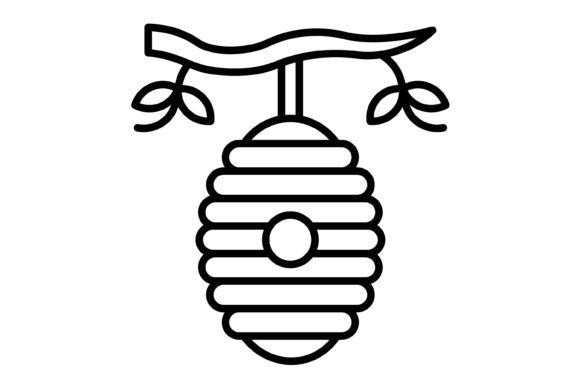
At its foundation, the Beehive Outline Icon is a vector-based illustration depicting a beehive structure. The "outline" style means it is constructed from lines and strokes rather than filled, solid shapes. This approach typically results in a cleaner, more minimalist, and often more modern visual language compared to fully rendered or skeuomorphic icons. The icon is commonly used to symbolize concepts like community, productivity, organization, collaboration, or even specific industries like agriculture and natural foods.
The distinctiveness of this particular asset lies in its delivery as part of a comprehensive package. It is not a single, isolated file but is provided in a suite of five different file formats: AI, EPS, JPG, PNG, and SVG. This multi-format approach is a significant practical consideration for designers and project managers.
Multi-Format Delivery: Weighing the Practical Tradeoffs
The inclusion of multiple formats in a single zip file addresses a common pain point in design workflows: format conversion and compatibility. Each format serves a different purpose, and having them all ready to use can streamline the production process.
- Vector Formats (AI, EPS, SVG): The AI and EPS files are industry-standard vector formats, ideal for professional editing in software like Adobe Illustrator. They allow for infinite scaling without loss of quality, which is crucial for projects that may move from a mobile app icon to a large banner print. The SVG format is particularly valuable for web and mobile applications, as it is lightweight, scalable, and can be manipulated with CSS.
- Raster Formats (JPG, PNG): The JPG is a standard compressed image format suitable for photographs and complex graphics where file size is a priority, though it does not support transparency. The PNG, especially with a transparent background, is essential for web design, presentations, and overlays where the icon needs to sit on various colored backgrounds without a white box around it.
The tradeoff here is that while you gain immense flexibility, you also receive multiple files to manage. For a project requiring only a single use-case, this might feel like unnecessary complexity. However, for teams or individuals working across multiple platforms—designing a mobile app, a companion website, and printed marketing materials—this bundle approach can be a substantial time-saver.
Application Across Platforms: Fit and Function
The stated suitability for Mobile Apps, Websites, Print, Presentation, Illustration, and Templates is a broad claim. Its validity hinges on the icon's design quality and the provided formats. A well-designed outline icon at its core should be:
- Legible at Small Sizes: For mobile apps and website favicons, the icon must remain recognizable even at very small pixel dimensions. The simplicity of an outline style often aids this, but poor line work can become a blurry mess.
- Scalable for Print: The vector formats ensure it can be used on business cards, flyers, or posters without pixelation, a key advantage over raster-only icons.
- Adaptable in Color: A true vector outline icon should be easy to edit and recolor to match any brand palette, a feature highlighted in the product's features.
Compared to a filled or detailed pictorial icon, the Beehive Outline Icon's style tends to integrate more seamlessly into minimalist UI designs, modern websites, and professional presentations where a less visually noisy element is preferred. It may feel less appropriate for projects seeking a highly detailed, illustrative, or vintage aesthetic, where a different style of iconography would be more suitable.
Decision Factors: When This Asset Makes Sense
Evaluating whether this icon is the right choice involves considering your project's specific needs and constraints.
Strengths and Best-Fit Scenarios
This package is a strong candidate if you value editability and cross-platform consistency. The promise of "100 vector icons" and "easy to edit and scale" suggests a resource built for professional use, where customization is often necessary. It is likely a good fit for:
- Startup Branding: A company looking for a cohesive set of icons for their app, website, and pitch deck would benefit from the format variety and scalability.
- UI/UX Design Systems: Teams building a design system need icons that are consistent, customizable, and available in web-friendly formats like SVG.
- Freelance Designers and Agencies: Professionals who work on diverse client projects can leverage such a bundle to quickly source compatible assets for different deliverables.
Limitations and Alternative Approaches
The primary limitation is inherent to any pre-made icon: it may not be perfectly unique. If your project requires a completely bespoke, one-of-a-kind illustration, a custom commission from an illustrator would be the alternative path, albeit at a higher cost and longer timeline. Furthermore, the "outline" style, while versatile, is not universally ideal. A children's educational app might benefit from more colorful, solid icons, and a heritage brand might require icons with more texture and detail.
Another consideration is the source and licensing. While not specified here, it is critical for any user to verify the license of such an asset pack to ensure it covers their intended use, whether for a single project, multiple projects, or commercial products.
Making an Informed Choice
The Beehive Outline Icon, presented in a multi-format bundle, is a practical resource designed for versatility and integration into modern design workflows. Its value is highest for projects that demand scalability, cross-platform compatibility, and a clean, contemporary visual style. The decision to use it should be based on a clear assessment of your project's aesthetic direction, technical requirements, and the need for customization versus the efficiency of a ready-made solution. By understanding its inherent style, format advantages, and situational fit, you can better determine if it aligns with your creative and practical objectives.